Customizing Textile and Tactile Skins for Interactive Industrial Robots
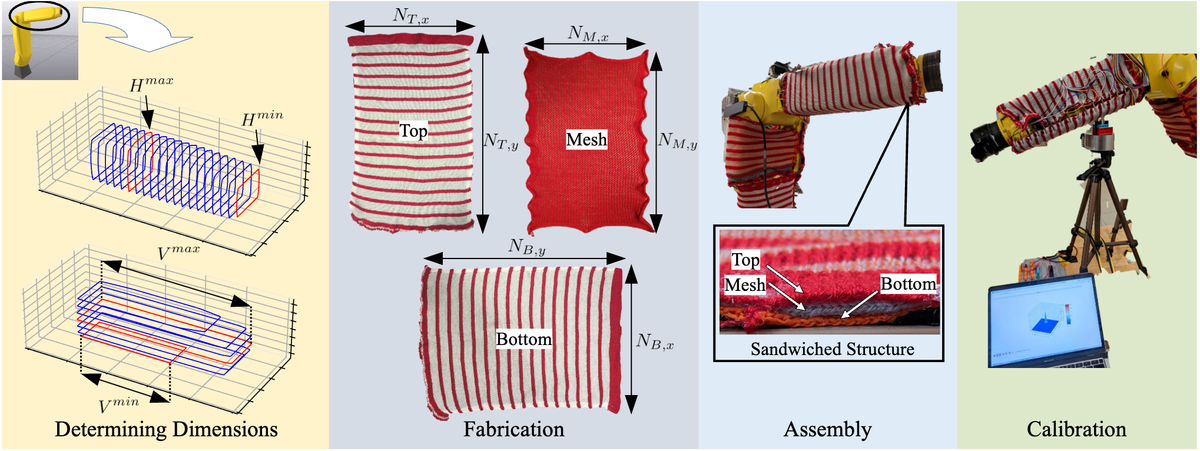
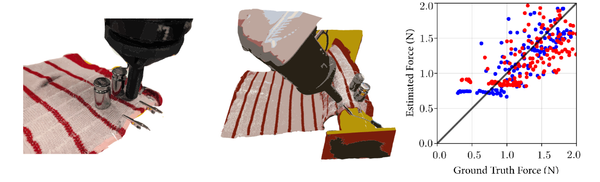
In this work, we explore using textile and tactile skins for human-robot interactions and control.
Why this work may be useful
The use of textile and tactile skin in human-robot interaction and learning is highly beneficial due to the familiarity, affordability, durability, and customizability of textiles. This research showcases how tactile skin can be employed for safe robot control, presenting a compelling alternative to traditional force-torque sensors. This innovative approach enhances human-robot interactions, potentially leading to more intuitive and safer robotic systems in various applications.
Why this work may not be useful
Soft, printed pressure-sensitive PCBs may offer an alternative to textile and tactile skins, potentially providing greater accuracy in pressure sensitivity. Furthermore, future advancements could integrate pressure sensors directly into a robot's outer casing, potentially replacing the need for tactile skin. This integration could streamline design and enhance the functionality of robotic systems, offering a more seamless and efficient approach to detecting and responding to external human inputs.
Verdict: Requires significant refinement to be useful & competitive to other alternatives