Optimizing Multi-Touch Textile and Tactile Skin Sensing Through Circuit Parameter Estimation
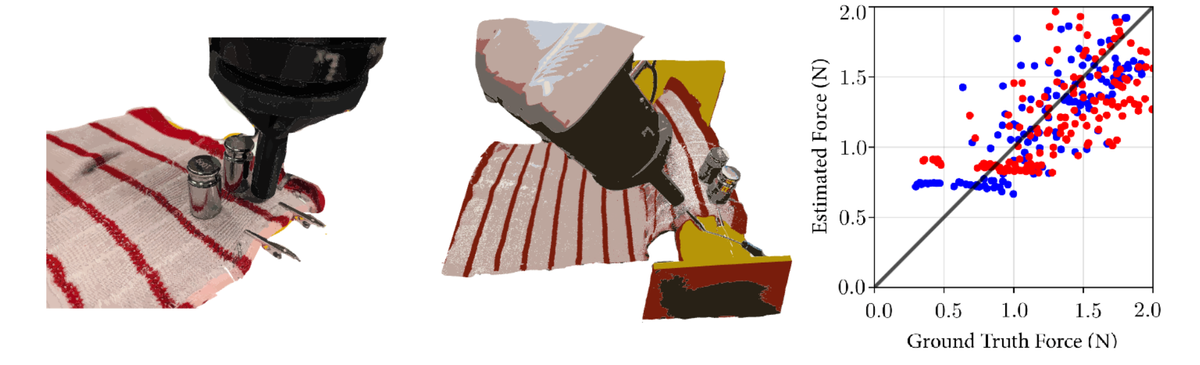
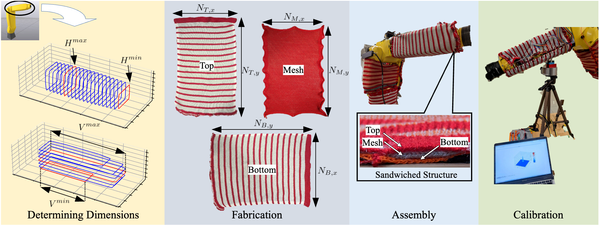
In this work, we explore Multi-Touch Textile and Tactile Skin Sensing. Due to the flexible and stretchable nature of textile and tactile skins, which can lead to noisy and dynamic pressure signals, this work adopts an optimization approach. It focuses on finding the most likely pressure distribution across the entire skin, considering the underlying circuit topology. This method aims to enhance accuracy and reliability in interpreting pressure data, a crucial aspect in the effective application of tactile skins for human-robot interaction.
Why this work may be useful
This work enhances the pressure sensing accuracy of textile and tactile skin, effectively reducing false signals. Its methodology and findings are not only applicable to textiles but can also be generalized to other resistance-based pressure sensing technologies.
Why this work may not be useful
Developing a more advanced and complex circuit or knit topology for the tactile skin could significantly enhance the quality of the signals it produces. Such improvements might render the methods outlined in this work less critical for achieving precise pressure sensing, as the improved design itself could inherently provide more accurate and reliable data.
Verdict: Useful for current skin manufacture process, but may be no longer the case when the technology improves